London
 UK
UK Ireland
 Scotland


Fire Escape Repairs
Address
London
CR2 6BG
About Fire Escape Repairs
- Cast iron railings repaired or replaced
- We also repair pavement escape hatches
- We specialise in repairs as a cost effective solution
Based in South London, Fire escape Ltd specialises in the repair, renovation, supply and fit of fire escapes. Owner Ian Cullingford has been in steel work for over twenty years, concentrating on fire-escapes for the last ten.
I want my fire escape repaired or replaced - what do I do?
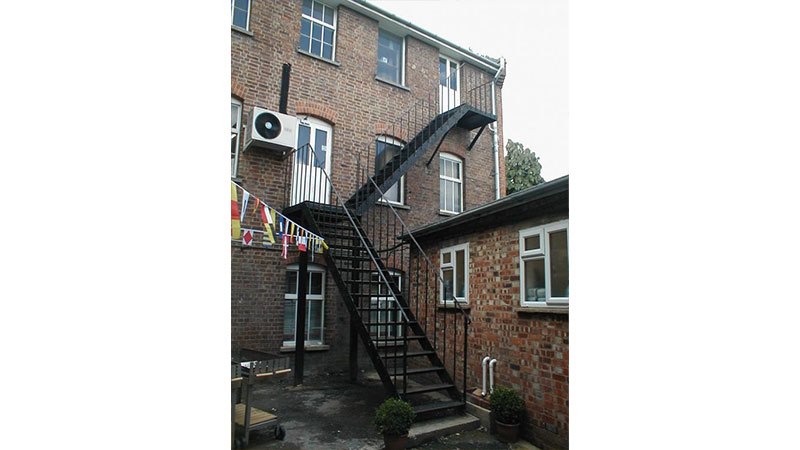
Repairing fire escape stairs are often cheaper than fitting new metal stairs. Metal staircases are often badly affected by corrosion, but this not obvious until a tread drops out of the staircase or we are asked to survey the structure. It is a good idea to survey metal staircases every few years. One area that is often overlooked is the requirement to have good fire escape signs, particularly in a commercial environment. Often the first verbal stair inspection is free of charge.
Renovation is often the least disruptive, most cost effective solution to the problem of dilapidated steel and cast iron staircases. Typically the stair is out of use during works from 9am until 5pm Monday to Friday, but returned to full use outside these times.
If you do require a new fire escape system, the first step is always to talk to your local authority, who will be able to tell you what you can construct at your property and what you are able to do under the provisions of the Building Regulations, which covers fire safety in all new and altered applications. The local authority can also advise you if there are any planning permission issues you need to be aware of.
The next step is to hire either a structural engineer or an architect who can engage a structural engineer on your behalf. Structural engineers oversee all aspects of design and construction of buildings and will provide you with a General Arrangement Drawing. This is a definitive drawing of the space the fire escape will occupy, how it will be mounted, the kind of paint finish it will have and its foundation requirements. If all of this seems a little a daunting we will be more than happy to liaise with local authorities, surveyors, architects, structural engineers and fire authorities on your behalf.
Fire Safety Surveys
A fire safety survey is a detailed and methodical examination of a company's premises, and the activities it carries out there, to determine ways in which the threat from the fire can be minimised. Until recently they would be performed by the Fire Brigade, who then issued fire safety certificates to show one had been conducted.
Fire escapes and disabled access
All employers have an obligation to ensure that their fire escape plans take account of disabled people. The specific responsibilities this entails are laid out by the following laws and regulations:
- Making 'reasonable adjustments' to premises so that employees can leave safely in the event of fire (Disability Discrimination Act 1995)
- Providing means of fire escape that are useable by disabled people (Fire Regulations and the Fire Precautions Act)
- Ensuring new or altered buildings can still be escaped from by disabled people (Building Regulations)
- Carrying out fire safety risk assessments, which include provisions for staff and visitors with impaired sight or hearing (Fire Reform Order)
Fire Extinguishers
The first modern fire extinguisher was invented by British sailor George William Manby in 1818, and worked by expelling potassium carbonate over the flames using compressed air. Although technology has moved on since then, these days fire extinguishers still remain the best way of preventing low-level conflagrations from endangering employees and destroying equipment by spreading.
High-Rise Fire Escape Systems
When fires break out in very tall buildings it can often cause additional problems that conventional fire escape routes aren't able to cope with. For example, people may become stranded on the higher floors if the corridors below them are blocked by fast-spreading smoke and flames, or if the fire escape stairs and exits are congested from large crowds attempting to use them at once.
Fixed Steel Ladders
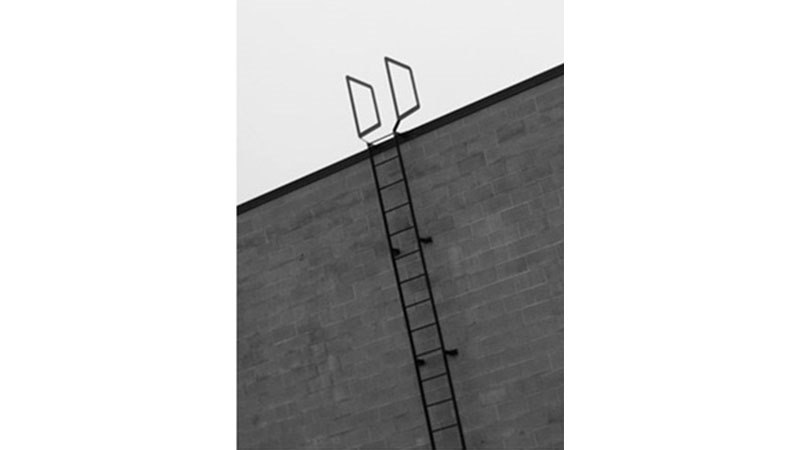
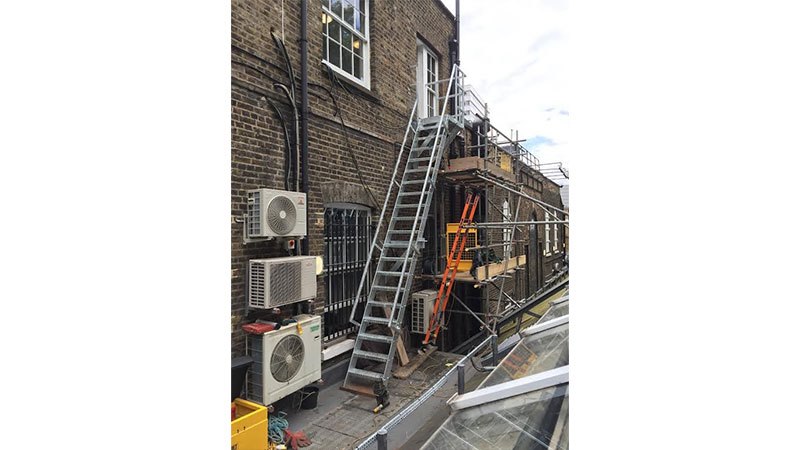
Fixed steel fire escape ladders can provide a means of escape if there is not physically enough room to install a staircase. However, most regulations (BS5395, Approved Document K etc) do not recommend their use, principally because the very old, and the very young, would find it hard to climb down them. Having said that, the exit route provided by a fixed fire escape ladder is definitely better than not having one at all.
Gallery
Location Map